Many potential buyers assume homeownership is out of reach. Rising headlines, competitive markets, and outdated assumptions often create a mental barrier long before the financial reality is

Dated: July 9 2025
Views: 390
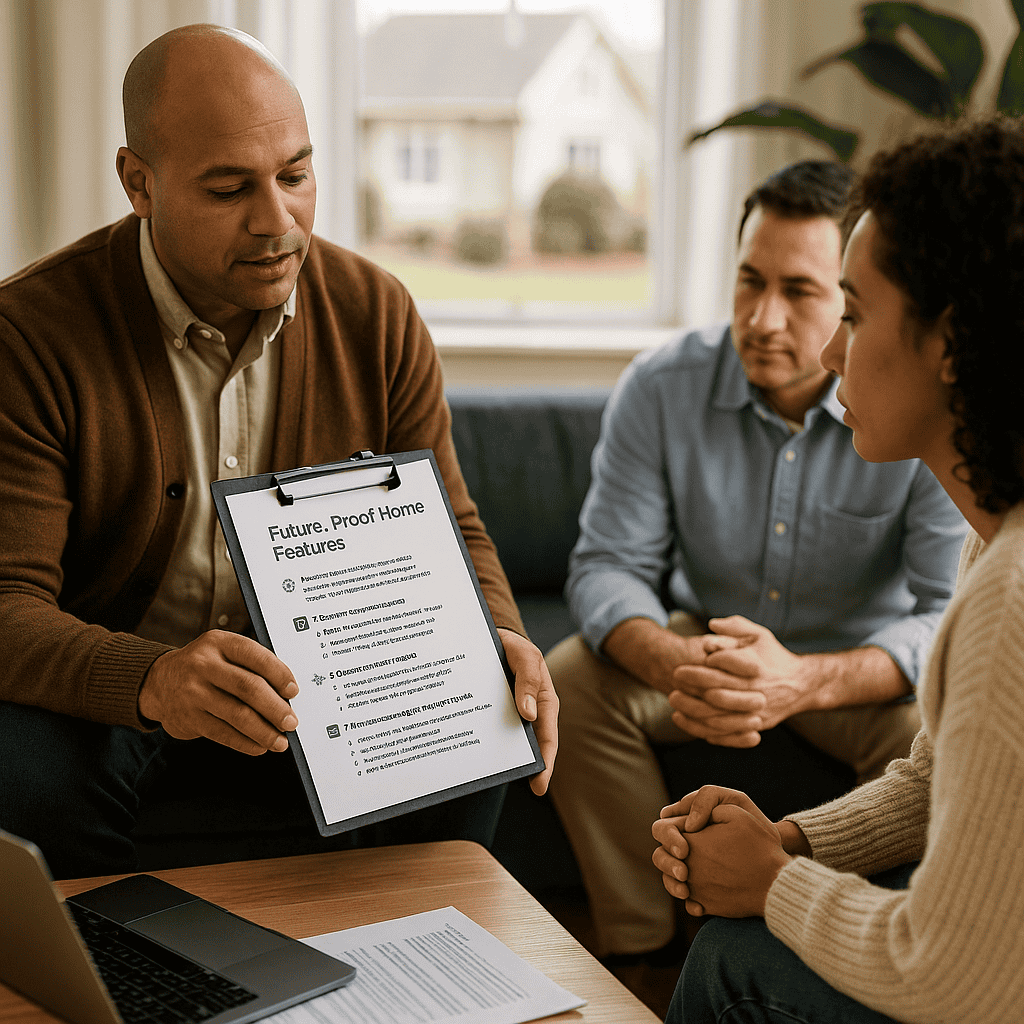
In today’s fast-shifting real estate market, the home you fall in love with today might be hard to resell tomorrow—unless you plan smart. A house is more than a home—it’s an investment for future you. By keeping resale in mind from day one, you protect your equity and open doors (literally and figuratively) when life shifts. Whether you're a first-time buyer or seasoned shopper, this guide helps you identify future-proof home features that stand the test of time and market cycles.
The best resale strategy begins with location—again. Trends change, but fundamentals don't. Look for communities with:
✅ High-performing schools
✅ Stable property values over 5+ years
✅ Planned growth: parks, retail, transit
✅ Low crime rates and community vibe
🛠️ Tip: Visit on weekdays, weekends, and evenings. Notice lighting, noise, neighbors. Love at first sight is great—but data and discovery build confidence.
Open floor plans, flexible spaces, and extra storage travel well across buyer profiles. What’s hot today may be outdated tomorrow. Prioritize:
Open-concept kitchens & living areas
Flexible rooms (guest spaces that become offices)
Adequate storage—attic, garage, built-ins
Outdoor appeal—usable patios or yards
Your goal: a layout that fits growing families, remote workers, retirees, and downsizers alike.
Trendy finishes are tempting, but lasting value lies in quality. Think ahead:
Durable countertops (quartz or granite)
Neutral, timeless flooring
Efficient, tankless water heaters
Windows that enhance HVAC efficiency
🧠 Choosing durable options minimizes renovation needs and cuts replacement costs later—boosting resale appeal.
Ignore cherry-picked comparisons. Build a realistic set:
Properties sold in the last 6–12 months
Range of features and price points
Pay attention to sold prices vs. list prices
Use this data to understand value ranges—don’t assume the top-tier comp equals your sale outcome. Your resale strategy becomes smarter when based on real market behavior.
Customize with intention. Too unique—too niche. Instead:
Choose neutral wall colors
Opt for a timeless kitchen palette
Invest in functional upgrades (e.g., smart thermostats)
You want buyers to say “I can make this my own,” not “I have to change everything.”
Create a simple worksheet to rank each property:
Schools: 1–10
Nearby amenities: 1–10
Layout versatility: 1–10
Upgrade quality: 1–10
Price relative to comps: 1–10
A total score of 40+ suggests solid future value. Share this with your agent—then ask them if they'd score it the same. It’s your negotiation tool.
Buying a home with resale in mind isn’t pessimistic—it’s proactive. As you tour, take notes through this lens:
Can this layout shift with your life?
Are upgrades durable and broadly appealing?
Does the area support long-term value?
Armed with this mindset, you can invest confidently. When the time comes to move on, your home will flex with your future—and maximize your return.
📩 Ready to explore homes that check all those boxes? Let’s talk about how I help buyers stay future-ready—and avoid mortgage surprises down the line.

Julie Yunger, was born and raised in the Portland, Oregon area. Her passion for the real estate industry began as a child when she followed her father, a local home builder, around his various constru....
Many potential buyers assume homeownership is out of reach. Rising headlines, competitive markets, and outdated assumptions often create a mental barrier long before the financial reality is
Most people assume confidence comes first—then you take action.But when you’re buying or selling a home, it often works the other way around. Confidence usually comes after you see a
If you’re thinking about selling your home, you’ve probably already felt it: pricing isn’t just a number. It’s personal.This is your home. It holds memories, effort,,
In today’s market, the highest-impact listings don’t begin when the photographer shows up — they begin the moment you sit down with your sellers. Strong preparation is the real
 © 2026 Arizona Regional Multiple Listing Service, Inc. All rights reserved. All information should be verified by the recipient and none is guaranteed as accurate by ARMLS. Information deemed to be reliable but not guaranteed. Listing broker has attempted to offer accurate data, but buyers are advised to confirm all items. Only IDX residential listings are displayed on this site. The information being provided is for consumers' personal, non-commercial use and may not be used for any purpose
other than to identify perspective properties consumers may be interested in. Information last updated on September 23, 2026 8:23 PM UTC
Show More...
© 2026 Arizona Regional Multiple Listing Service, Inc. All rights reserved. All information should be verified by the recipient and none is guaranteed as accurate by ARMLS. Information deemed to be reliable but not guaranteed. Listing broker has attempted to offer accurate data, but buyers are advised to confirm all items. Only IDX residential listings are displayed on this site. The information being provided is for consumers' personal, non-commercial use and may not be used for any purpose
other than to identify perspective properties consumers may be interested in. Information last updated on September 23, 2026 8:23 PM UTC
Show More...
 All information provided is deemed reliable but is not guaranteed and should be independently verified. IDX information is provided exclusively for consumers' personal, non-commercial use, that it may not be used for any purpose other than to identify prospective properties consumers may be interested in purchasing, and that the data is deemed reliable but is not guaranteed accurate by RMLSTM.
The content relating to real estate for sale on this web site comes in part from the IDX program of the RMLSTM of Portland, Oregon. Real estate listings held by brokerage firms other than eXp Realty in Oregon are marked with the RMLSTM logo, and detailed information about these properties includes the names of the listing brokers. Listing content is copyright © 2026 RMLSTM, Portland, Oregon.
This content last updated on September 23, 2026 9:00 PM UTC at 4 AM. Some properties which appear for sale on this web site may subsequently have sold or may no longer be available.
All information provided is deemed reliable but is not guaranteed and should be independently verified. IDX information is provided exclusively for consumers' personal, non-commercial use, that it may not be used for any purpose other than to identify prospective properties consumers may be interested in purchasing, and that the data is deemed reliable but is not guaranteed accurate by RMLSTM.
The content relating to real estate for sale on this web site comes in part from the IDX program of the RMLSTM of Portland, Oregon. Real estate listings held by brokerage firms other than eXp Realty in Oregon are marked with the RMLSTM logo, and detailed information about these properties includes the names of the listing brokers. Listing content is copyright © 2026 RMLSTM, Portland, Oregon.
This content last updated on September 23, 2026 9:00 PM UTC at 4 AM. Some properties which appear for sale on this web site may subsequently have sold or may no longer be available.
